Materials & manufacturing
FKM development: connecting compound, component and application
How fluid exposure, sample evaluation and the finished seal's geometry fit into an FKM material-development discussion.
← News & events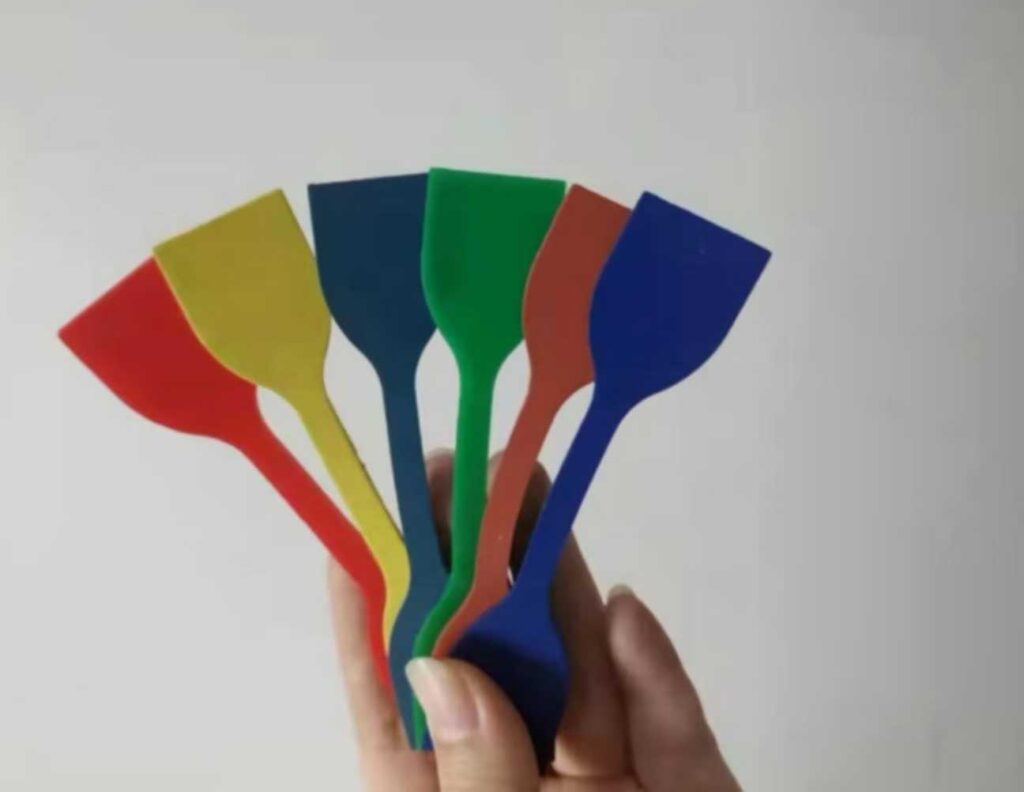
Start with the component's job
Royal Way's FKM material development concerns oilfield sealing applications. The useful starting point is the job of the component: what it seals, what it contacts and how it is fitted. A polymer name on its own does not describe all of those requirements.
The photograph shows coloured rubber test specimens. Such specimens provide a convenient form for material evaluation, while the finished component has its own dimensions, profile and installation conditions. These are related parts of development, but they answer different questions.
Describe exposure as a sequence
An application may involve a working fluid, a cleaning fluid and changes between operating and storage conditions. Describing that sequence gives more context than stating a maximum temperature alone. Fluid composition and the duration of contact also belong in the material discussion.
For replacement parts, the existing drawing and compound reference help establish what is already specified. For a new design, define the intended service and which part of the specification remains open to development.
Separate material evaluation from part inspection
A material specimen can be used to examine specified properties under defined test conditions. A finished seal also needs dimensional and visual inspection against its own drawing. Passing one type of check should not be used as a substitute for the other.
Before evaluating samples, agree what is to be measured and how the result will be judged. This makes the sample stage useful to the next decision, whether that is changing a requirement, producing another sample or preparing a production order.
Colour and documentation
Colour can help distinguish components, but it does not establish compound identity or performance. Keep the material reference with the drawing and order requirements. If a material report is needed, state which compound, component or supplied batch the document is expected to cover.
Updated 20 September 2026