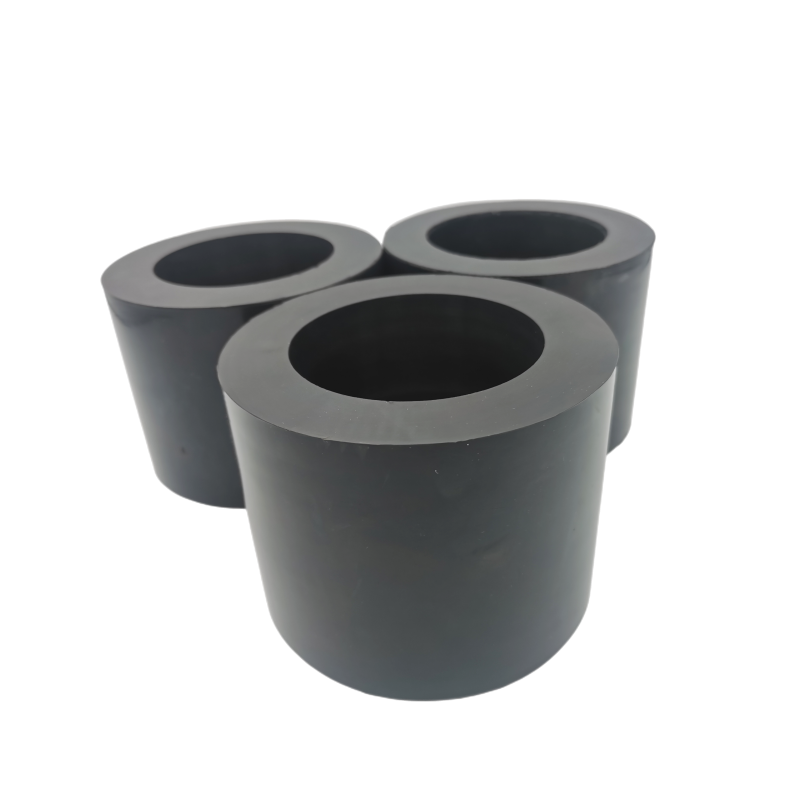
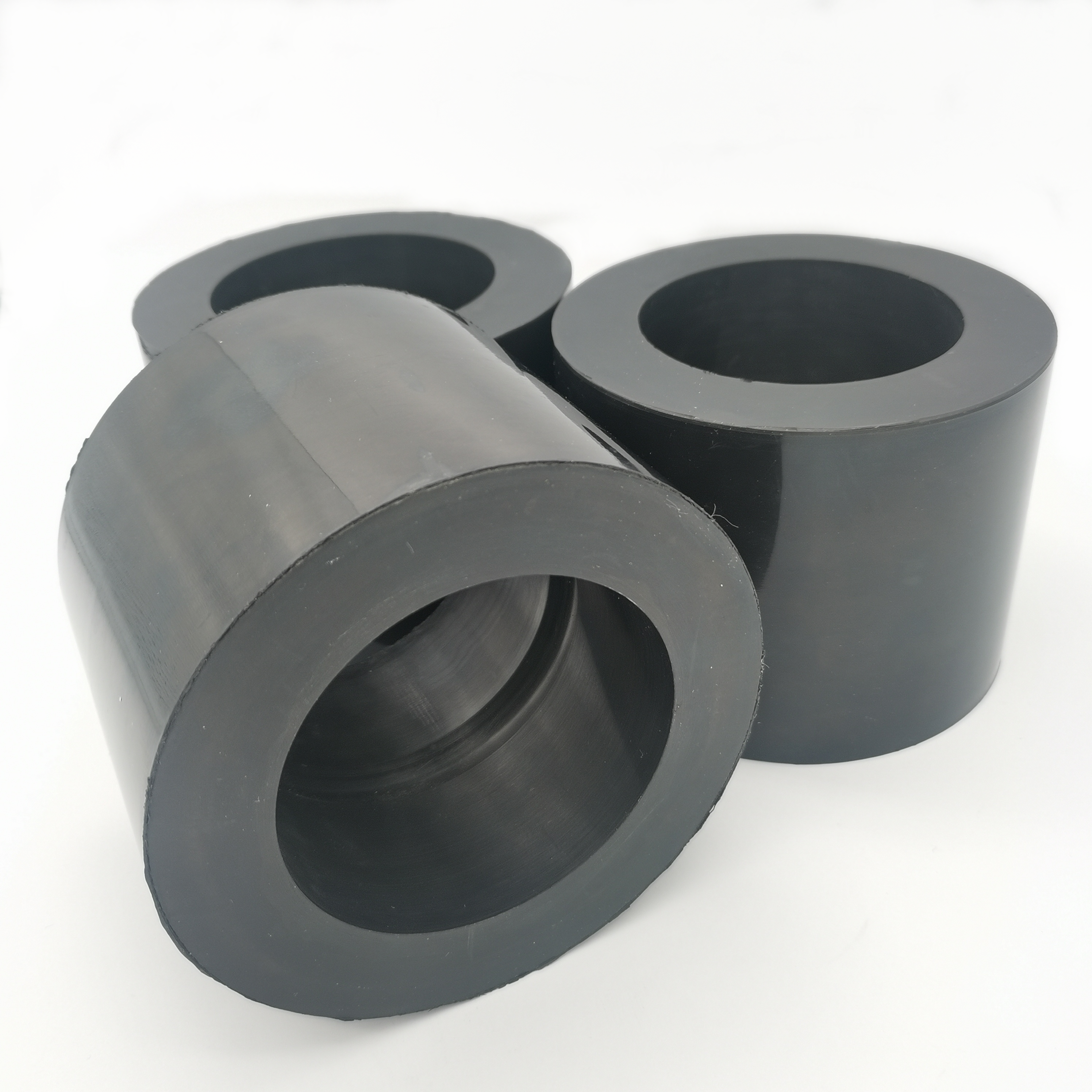
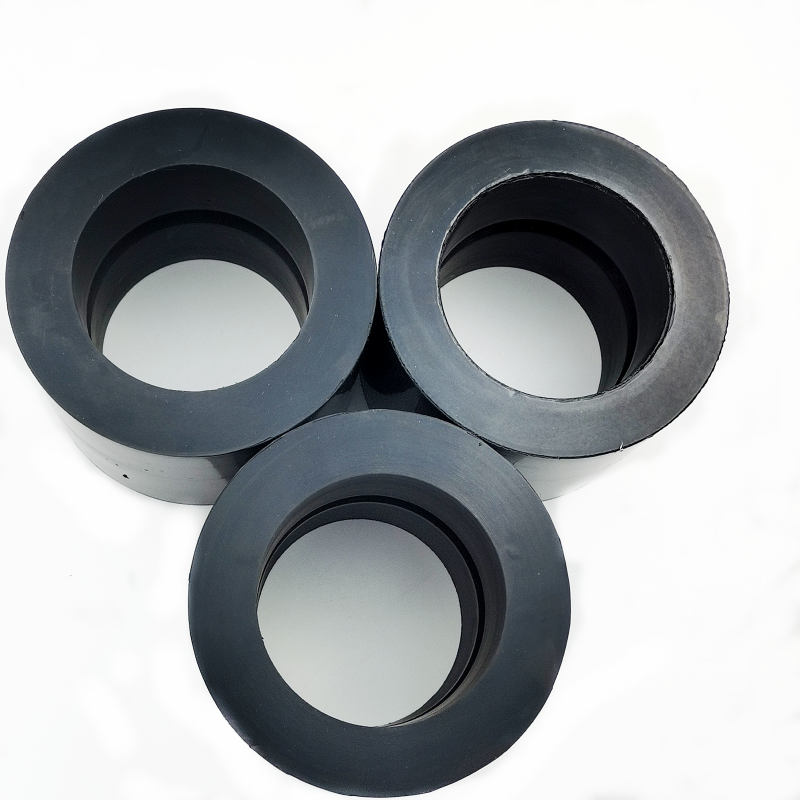
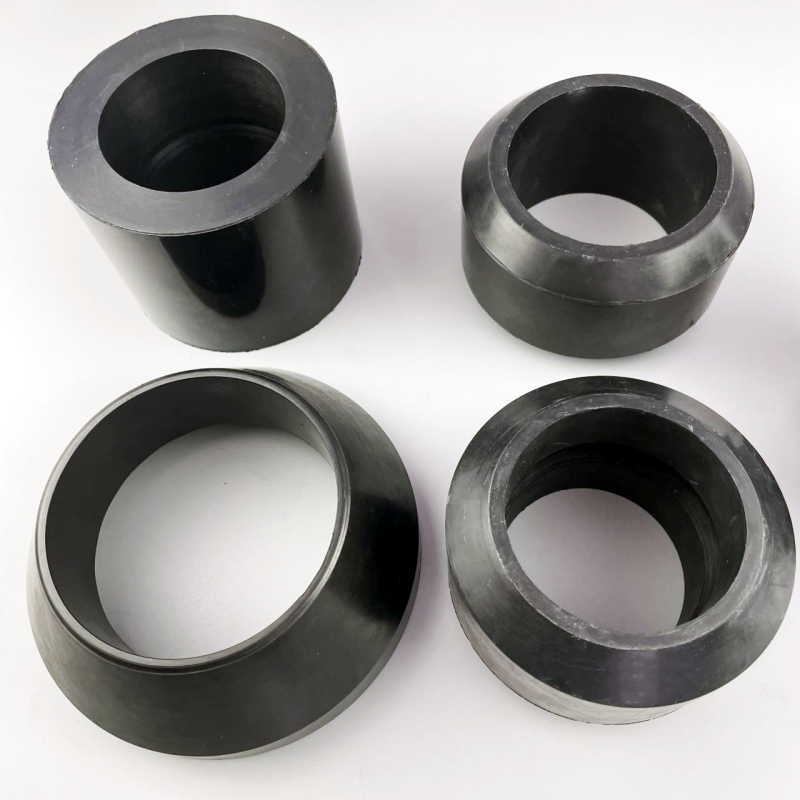
/ Packer Element
Sour Gas (H2S) Resistant HNBR Packer Elements | High-Pressure Zonal Isolation
In the downhole environment, the integrity of your zonal isolation depends entirely on the performance of the elastomer. Whether setting a retrievable packer for a frac job or a bridge plug for abandonment, the Packer Element is the single point of failure.
At Royal Way, we manufacture high-performance Packer Elements engineered to withstand the most hostile wellbore conditions. From standard 3-piece sets to complex mesh-backed unitized elements, our seals are formulated to provide a positive, leak-proof barrier against extreme differential pressures (up to 10,000+ PSI) and temperatures ranging from -20°F to 450°F.
Technical Specifications
- Material Grade: Standard NBR (Nitrile) -20°F to +250°F
- High-Temp HNBR -20°F to +325°F
- FKM (Viton®) -15°F to +400°F
- Aflas® (TFE/P) +32°F to +450°F
- EPDM -40°F to +350°F Geothermal (No Oil)
Typical Applications
- Retrievable Production Packers: Long-term zonal isolation.
- Service Packers: Squeeze cementing, acidizing, and fracturing tools.
- Bridge Plugs (RBP / CIBP): Temporary or permanent well abandonment.
- Liner Hangers: Sealing the liner top.
- Test Tools: DST (Drill Stem Test) tools requiring multiple set/unset cycles.
Product: Sour Gas (H2S) Resistant HNBR Packer Elements | High-Pressure Zonal Isolation
1. Executive Summary: The Safety Shield for Sour Environments
Hydrogen Sulfide (H2S) is the “silent killer” of downhole elastomers. In Sour Gas environments, standard Nitrile (NBR) suffers from rapid sulfur cross-linking, causing Sulfide Stress Embrittlement. The element becomes rock-hard, loses its seal, and can shatter under pressure, risking catastrophic well control issues.
Royal Way Sour Gas Resistant HNBR (Hydrogenated Nitrile) Packer Elements are the engineered solution for these hostile conditions. Manufactured to meet NACE MR0175 / ISO 15156 guidelines, our HNBR elements bridge the gap between standard rubber and expensive fluorocarbons. They offer robust resistance to H2S attack, excellent high-pressure extrusion resistance, and superior mechanical toughness for deep, tortuous wellbores.
2. Material Science: Why HNBR for Sour Gas?
The Chemistry of Hydrogenation
Standard NBR contains unsaturated double bonds that are easily attacked by H2S and heat.
-
The Royal Way Process: Our HNBR is produced by fully saturating the polymer backbone with hydrogen. This eliminates the weak points, rendering the material chemically stable against H2S degradation and thermal oxidation.
-
The Result: An element that remains flexible and elastic even after prolonged exposure to sour crude and gas at temperatures up to 325°F (163°C).
Combating Rapid Gas Decompression (RGD)
High-pressure gas permeates into the rubber matrix. When the pressure drops (e.g., retrieving the packer), this trapped gas expands.
-
RGD Resistance: Our high-modulus HNBR compound is formulated to resist internal rupturing (blistering) caused by this gas expansion. This makes it the ideal choice for high-pressure gas lift valves and gas storage wells.
3. Performance Comparison: HNBR vs. Viton®
While Viton® (FKM) has higher heat resistance, HNBR is mechanically tougher.
| Feature | HNBR (Royal Way Sour Grade) | Viton® (FKM) | Standard NBR |
| Tensile Strength | Superior | Good | Good |
| Abrasion Resistance | Excellent | Fair | Excellent |
| H2S Resistance | Excellent | Good | Poor (Fails) |
| Max Temp | 325°F (163°C) | 400°F (204°C) | 250°F (121°C) |
| Cost | Medium | High | Low |
Selection Tip: If your well is <325°F but requires running the tool through a long, rough deviation (doglegs), choose HNBR. It is far less likely to tear or chunk-out during the trip in than Viton®.
4. Configuration Options
We supply H2S-resistant elements for a wide range of isolation tools:
A. 3-Piece Element Sets (Retrievable Packers)
-
System: 90-80-90 or 90-70-90 Shore A Durometer stack.
-
Application: AS1-X, Model R, and hydraulic set packers. The harder end elements prevent the HNBR from extruding into the casing-tool gap.
B. Unitized Elements (Bridge Plugs)
-
System: Solid HNBR with embedded Wire Mesh or Steel Slats.
-
Application: Cast Iron Bridge Plugs (CIBP) and Cement Retainers where a permanent, gas-tight seal is required.
5. Typical Applications
-
Sour Oil & Gas Production: Wells containing H2S concentrations that embrittle standard NBR.
-
CO2 Injection (EOR): Enhanced Oil Recovery wells where Carbon Dioxide is present (HNBR has excellent CO2 resistance).
-
Deep, Deviated Wells: Where the tool must withstand significant physical abuse while running in hole (RIH) before setting.
-
High-Pressure Testing: DST tools requiring repeated high-pressure cycles.
6. Technical Specifications
| Technical Parameter | Specification |
| Material | Hydrogenated Nitrile Butadiene Rubber (HNBR) |
| Acrylonitrile Content (ACN) | Optimized for chemical resistance (36% – 43%) |
| H2S Limit | Suitable for moderate to high concentrations |
| Temperature Rating | -20°F to +325°F (-29°C to +163°C) |
| Pressure Rating | Up to 10,000 PSI (with proper backup) |
| Color Identification | Black with Green Dot/Marking |
| Shelf Life | 15 Years (Stored properly) |
7. Ordering Information
-
Tool Type: Specify the packer model (e.g., AS1-X, AD-1).
-
Casing Size & Weight: Critical for determining the correct Element OD.
-
Environment: Please specify “Sour Gas / H2S” so we verify the compound selection.