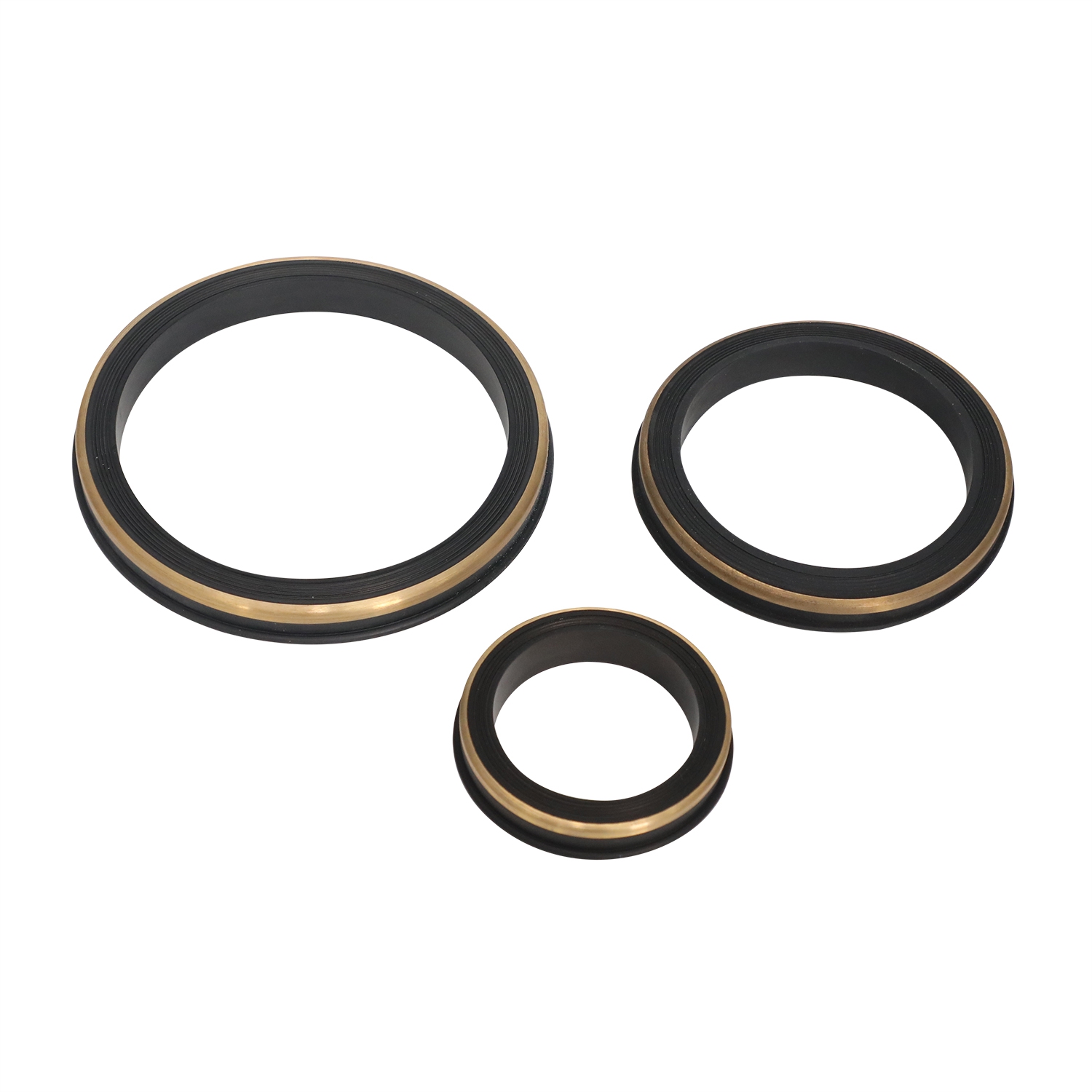
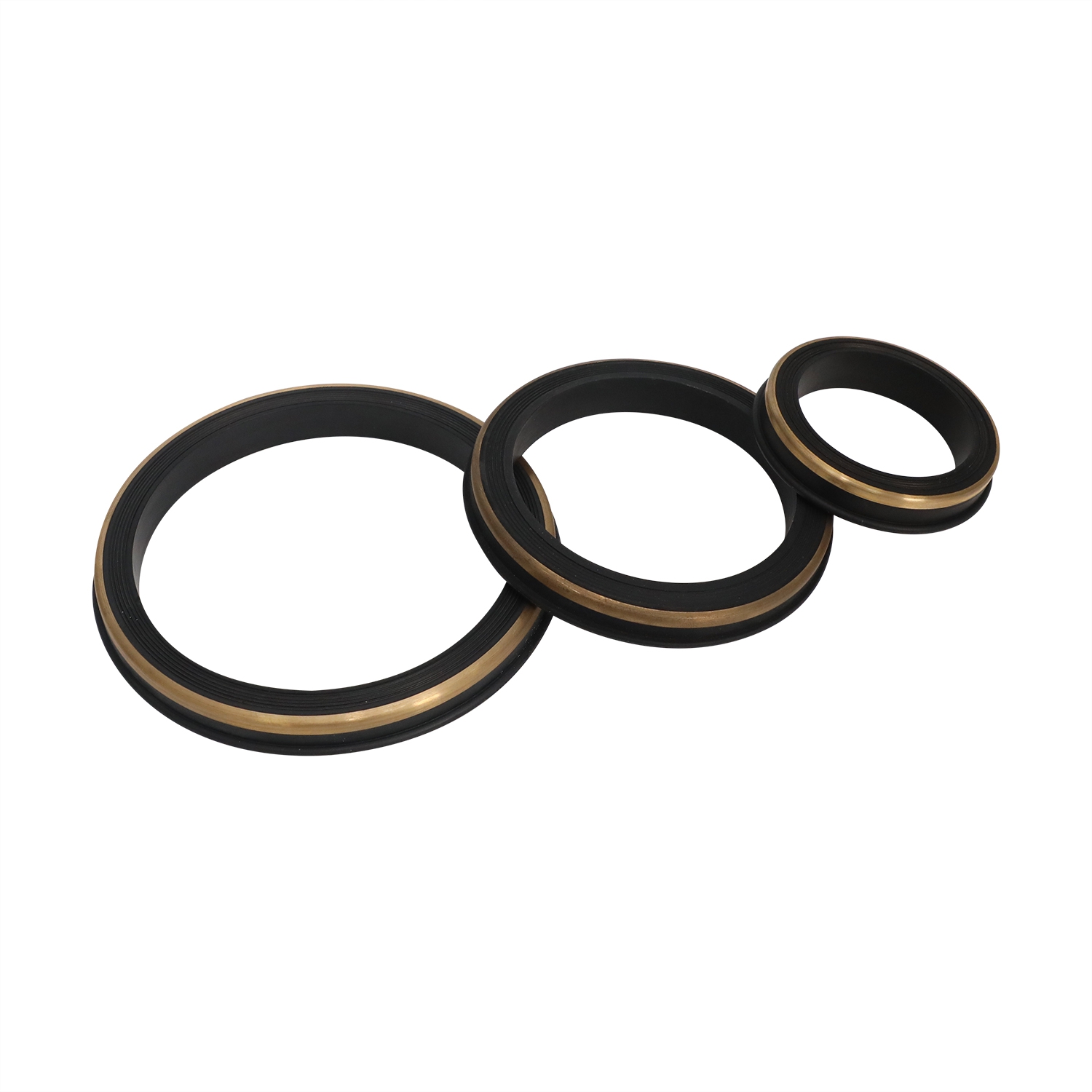
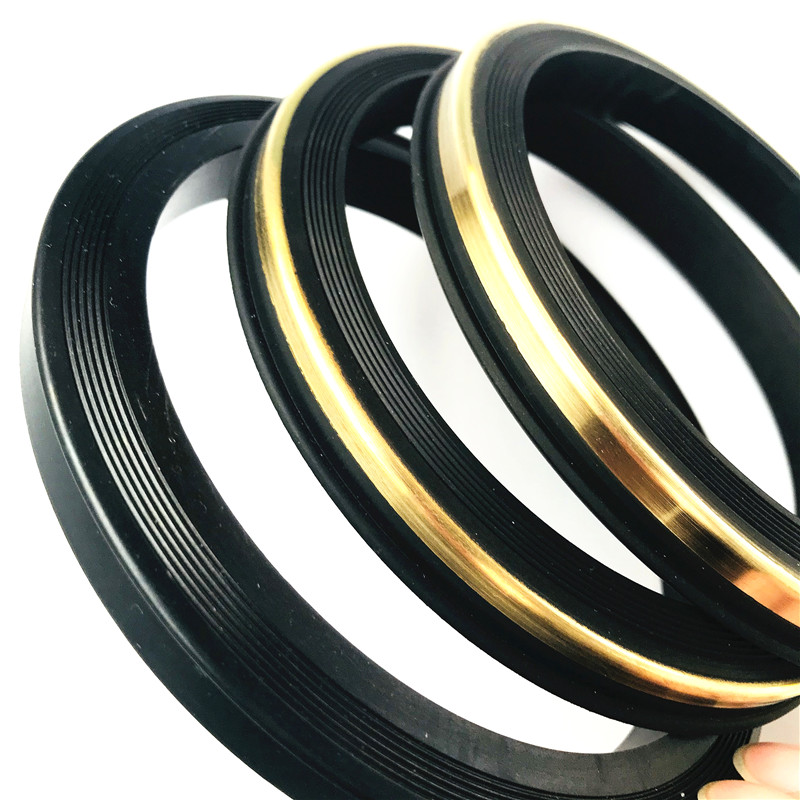
/ Hammer Union Seals
High-Temp HNBR Hammer Union Seals for Acidizing & Cementing
Our Sour Gas Service HNBR (Hydrogenated Nitrile Butadiene Rubber) Hammer Union Seals are the industry-standard solution for Figure 1502 connections in sour environments, these seals are formulated to comply with NACE MR0175 / ISO 15156 guidelines, offering exceptional resistance to H2S embrittlement, high-pressure extrusion, and chemically aggressive drilling fluids.
Technical Specifications
- Working Pressure Ratings: 1,000 PSI to 22,500 PSI (depending on union rating)
- Durometer: 80-95 Shore A
Applications
- Hydraulic Fracking: High-pressure sand and proppant injection lines.
- Flowback Operations: Managing post-frac fluids and gases.
- Choke & Kill Manifolds: Safety-critical well control connections.
- Mud Lines: Circulating drilling mud systems.
- Acidizing & Cementing: Handling abrasive cement slurries and acid fluids.
High-Temp HNBR Hammer Union Seals for Acidizing & Cementing
1. Executive Summary: The Hybrid Solution for Heat & Chemistry
Service companies running mixed fleets for Cementing and Acidizing face a dilemma: Standard NBR cannot handle the heat of curing cement, and Viton® (FKM) cannot handle the high pH of cement slurries or the abrasion of proppants.
Our High-Temp HNBR Hammer Union Seals are the “Universal Soldier” for well stimulation. By utilizing a Peroxide Cure System, we elevate the temperature ceiling of the HNBR to 325°F+, while retaining the abrasion resistance needed for sand and cement. This seal consolidates inventory, replacing both NBR and Viton in 90% of stimulation applications.
2. The Challenges of Cementing & Acidizing
The Exothermic Heat Spike
As cement goes through its hydration phase, it generates an exothermic reaction. Combined with the friction of pumping heavy slurry at 80 BPM (Barrels Per Minute), flowline temperatures can rapidly spike.
-
Performance: Our High-Temp HNBR maintains its modulus (stiffness) up to 325°F, preventing the seal from softening and extruding through the union gap during the critical “displacement” phase of the job.
Chemical Robustness
-
vs. Acid: Excellent resistance to 15% and 28% Hydrochloric Acid (HCl) and Mud Acid (HCl/HF) blends used in well stimulation.
-
vs. Cement: Unlike FKM (Viton), which can be attacked by the caustic (High pH) nature of wet cement and certain amine-based additives, HNBR remains chemically stable.
3. Comprehensive Data Sheet
| Technical Parameter | Specification |
| Material Type | Peroxide-Cured HNBR |
| Primary Benefit | Heat + Abrasion + Chemical Resistance |
| Temp Rating | +325°F (+163°C) Continuous |
| Short Term Peak | +350°F (+177°C) |
| Abrasion Resistance | High (DIN < 140mm³) |
| Chemical Resistance | Acids, Caustics, Amines, Corrosion Inhibitors |
| Compatible Unions | Fig 1502, 1002, 602 |
| Color | Green (Standard) or Custom |
4. Inventory Consolidation Strategy
For pump trucks that switch between Acid, Cement, and Frac jobs, stocking multiple seal types (Black NBR, Orange Viton, Green HNBR) invites installation errors.
-
Our Recommendation: Standardize on High-Temp HNBR. It handles the Frac sand (like NBR), the Acid (like Viton), and the Heat (better than NBR), significantly reducing the risk of using the wrong seal.