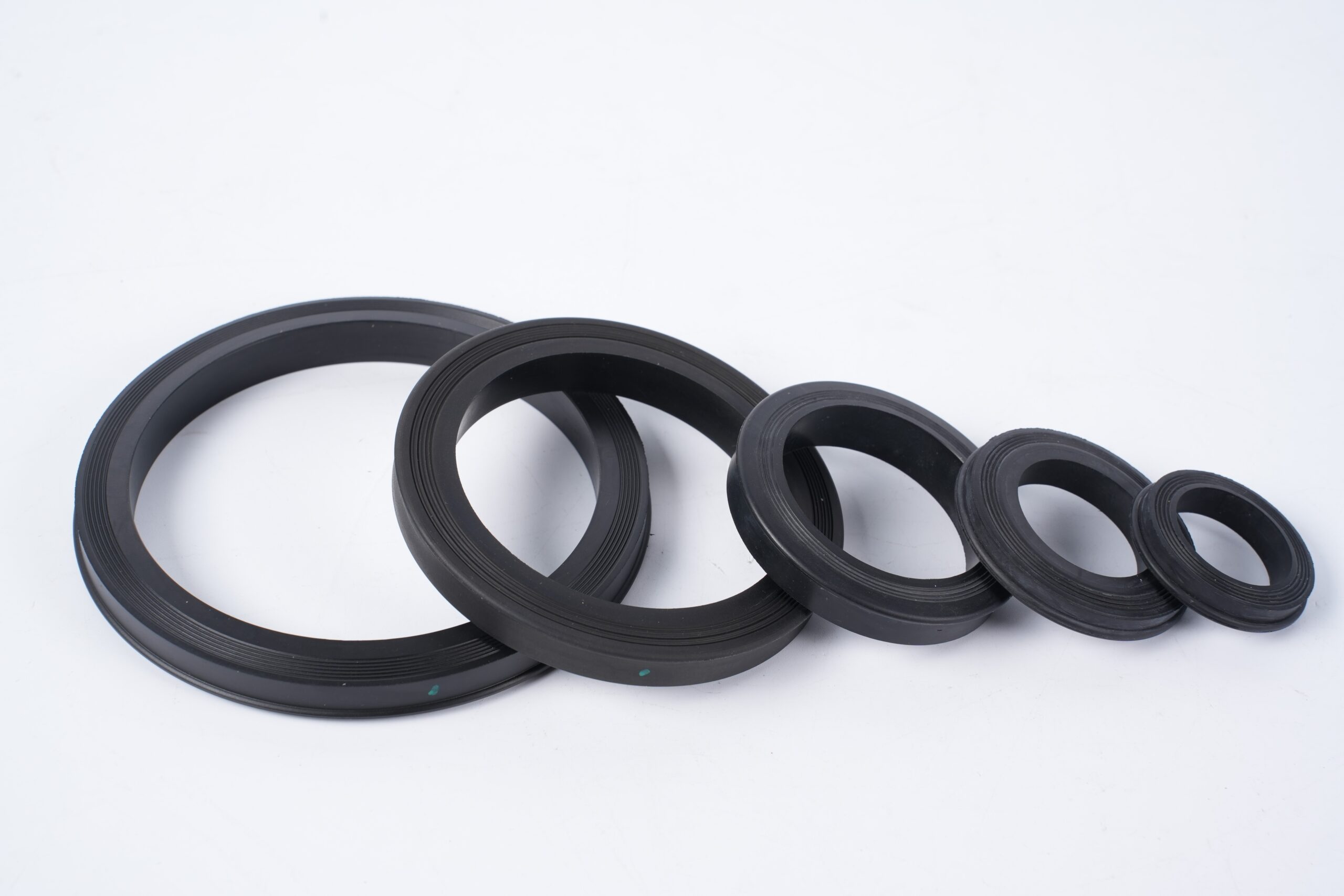
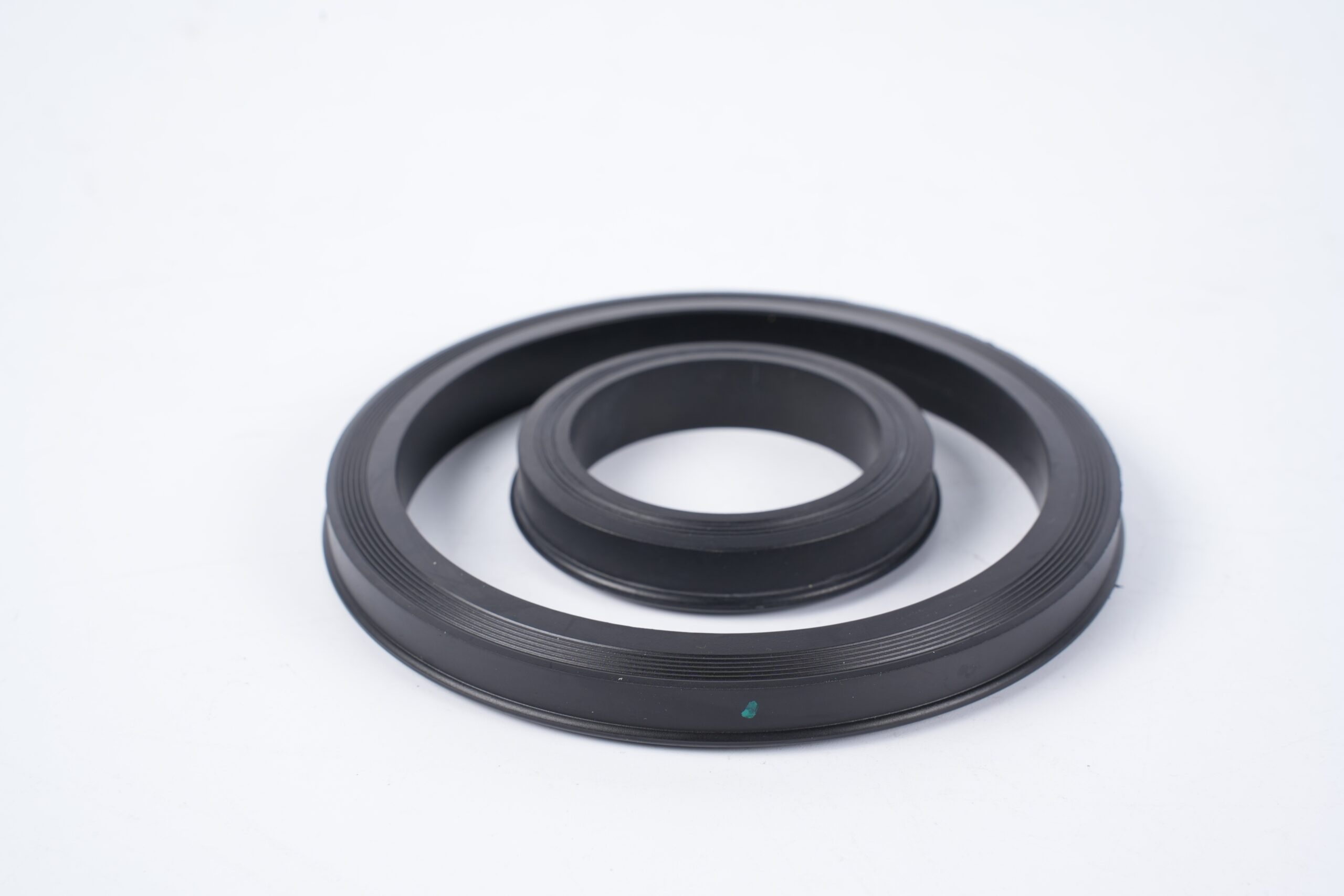
/ Hammer Union Seals
Chemical Resistant FKM (Viton®) Hammer Union Seals for Fig 1502
In the complex world of well stimulation and flowback, fluids are rarely pure. They are cocktails of acids, solvents, corrosion inhibitors, and hydrocarbons. Standard NBR seals disintegrate in these mixtures, and HNBR has limits.
Technical Specifications
- Working Pressure Ratings: 1,000 PSI to 22,500 PSI (depending on union rating)
- Durometer: 80-95 Shore A
Applications
- Hydraulic Fracking: High-pressure sand and proppant injection lines.
- Flowback Operations: Managing post-frac fluids and gases.
- Choke & Kill Manifolds: Safety-critical well control connections.
- Mud Lines: Circulating drilling mud systems.
- Acidizing & Cementing: Handling abrasive cement slurries and acid fluids.
Chemical Resistant FKM (Viton®) Hammer Union Seals for Fig 1502
1. Executive Summary: The “Universal Shield” for Chemical Handling
Our Chemical Resistant FKM (Viton®) Hammer Union Seals are the ultimate problem solvers for Figure 1502 connections handling aggressive chemical streams. Instantly identifiable by their industry-standard Orange Color, these seals utilize a premium Fluoroelastomer compound that offers the broadest chemical resistance profile of any standard oilfield rubber, combined with a temperature ceiling of 400°F (204°C). They are the preferred choice for “Mixed Fleet” operations where one seal must handle everything from diesel to hydrochloric acid.
2. Material Science: The Power of Fluorine
Why FKM Outperforms NBR/HNBR
The secret lies in the Carbon-Fluorine bond—one of the strongest bonds in organic chemistry.
-
Chemical Inertness: While NBR swells in aromatics (like Toluene/Xylene) and degrades in acids, FKM remains stable. It effectively “ignores” the chemical attack that destroys other elastomers.
-
Thermal Endurance: FKM does not suffer from “heat aging” like NBR. It retains its elasticity and sealing force continuously at 400°F, making it critical for deep, hot wells or high-friction pumping operations.
Type A Dipolymer Architecture
Our standard Chemical Resistant seals are based on Viton® Type A (Dipolymer) architecture (~66% Fluorine content). This provides the optimal balance between:
-
Excellent resistance to Oil, Grease, and Hydraulic Fluids.
-
Superior resistance to Hydrocarbon Solvents (Benzene, Toluene).
-
Good cost-to-performance ratio for general chemical service.
3. Comprehensive Technical Specifications
| Technical Parameter | Specification Data |
| Compatible Union | Figure 1502 (Weco® Style) |
| Material | Fluoroelastomer (FKM / FPM / Viton®) |
| Grade | Type A (Dipolymer) |
| Color | Orange (Industry Standard) |
| Hardness | 90 Shore A (±5) |
| Working Pressure | 15,000 PSI (Standard Service) |
| Temperature Range | -15°F to +400°F (-26°C to +204°C) |
| Compression Set | Very Low (< 15% @ 200°C) |
| Backup Ring | Brass (Standard) or Stainless Steel |
4. Chemical Compatibility Matrix
-
✅ Excellent For:
-
Mineral Acids (Hydrochloric, Sulfuric, Phosphoric).
-
Aromatic Hydrocarbons (Xylene, Toluene, Benzene).
-
Chlorinated Hydrocarbons (Solvents).
-
High-Temperature Crude Oil & Diesel.
-
Vacuum Service.
-
-
❌ Avoid:
-
Ketones (Acetone, MEK).
-
Low Molecular Weight Esters.
-
Amines (Use Aflas® for strong amines).
-
Superheated Steam (Use EPDM or Special FKM).
-
5. Field Applications
-
Acidizing Units: Handling HCl blends for well stimulation.
-
Solvent Pumping: Injecting Xylene/Toluene for paraffin removal.
-
High-Temp Flowback: Wells producing fluids >300°F where HNBR life is shortened.